IP Ratings: Choosing the Right Protection
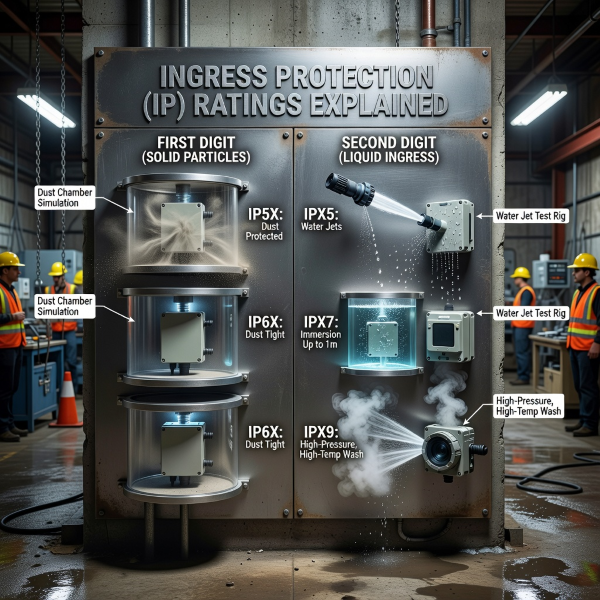
IP (Ingress Protection) ratings are defined by IEC 60529 and indicate how well an enclosure protects against solids and liquids.
The first digit (0–6) refers to protection from dust and objects, while the second digit (0–9) refers to water resistance. For example, IP65 means complete dust protection and resistance to water jets.
Higher numbers indicate stronger protection.
What Is an IP Rating?
An IP rating is an international standard used to classify how effectively electrical enclosures prevent the entry of dust, debris, and moisture. It replaces vague terms like “waterproof” or “weatherproof” with measurable, testable protection levels.
This system is widely used across industries including solar, battery systems, lighting, industrial equipment, and outdoor electronics.
Why IP Ratings Matter
Choosing the correct IP rating ensures:
- Safety by preventing contact with live components
- Reliability in harsh environments
- Longer equipment lifespan
- Compliance with electrical standards
- Reduced maintenance and replacement costs
How to Read an IP Rating
An IP rating follows this format: IPXY
IP = Ingress Protection
X = Protection against solids (0–6)
Y = Protection against liquids (0–9)
If a digit is replaced with “X”, it means that category was not tested.
Example:
IP65 = Dust-tight (6) + protection against water jets (5)
IP Ratings Chart Overview
Protection Against Solids (First Digit)
0: No protection
1: Protection from large objects (>50mm)
2: Protection from fingers (>12.5mm)
3: Protection from tools (>2.5mm)
4: Protection from small objects (>1mm)
5: Dust protected (limited ingress)
6: Dust tight (complete protection)
Protection Against Liquids (Second Digit)
0: No protection
1–2: Protection from dripping water
3–4: Protection from spray and splashing
5: Protection from water jets
6: Protection from powerful jets
7: Temporary immersion (up to 1m)
8: Continuous immersion (manufacturer specified)
9K: High-pressure, high-temperature washdown
Most Common IP Ratings and Applications
IP20
Best for indoor use only. No water protection. Common in distribution boards and internal electronics.
IP44
Suitable for covered outdoor areas and bathrooms (outside direct water zones). Protects against splashes.
IP54
Offers limited dust protection and splash resistance. Used in light industrial or sheltered outdoor environments.
IP65
One of the most widely used ratings. Fully dust-tight and protected against water jets. Ideal for solar equipment, outdoor lighting, and electrical enclosures.
IP66
Handles powerful water jets. Suitable for marine, coastal, and industrial washdown environments.
IP67
Provides dust-tight sealing and protection against temporary immersion. Common in outdoor electronics and devices exposed to flooding risk.
IP68
Designed for continuous submersion. Used in underwater lighting, pumps, and marine equipment.
IP69K
The highest protection level. Withstands high-pressure, high-temperature cleaning. Common in food processing and industrial sanitation environments.
How to Choose the Right IP Rating
-
Assess the Environment
Consider dust levels, moisture exposure, cleaning methods, and risk of immersion. -
Match the Minimum Requirement
Indoor dry: IP20
Indoor humid: IP44
Covered outdoor: IP44–IP54
Exposed outdoor: IP65
Dusty environments: IP5X or IP6X
Water jets: IP65 or IP66
Flood risk: IP67
Underwater: IP68 -
Plan for Real Conditions
Factor in weather, cleaning processes, and long-term wear. -
Avoid Over- or Under-Specifying
Higher ratings increase cost, but insufficient protection leads to equipment failure.
IP Ratings for Common Applications
Solar Systems
Panels and inverters typically require IP65 or higher for outdoor durability.
Chargers
Keep in mind not only where you are using your chargers but where you are storing them.
Batteries and Power Equipment
Indoor systems range from IP20 to IP54, while outdoor enclosures should be IP65.
Lighting
Indoor: IP20–IP44
Outdoor: IP44 (covered) or IP65 (exposed)
Underwater: IP68
Security Systems
Outdoor cameras should be at least IP66, with IP67 recommended for extreme conditions.
Common Misconceptions
“Waterproof” always means IP68
Not necessarily. True waterproofing depends on depth and duration specified by the manufacturer.
Higher IP is always better
Only if required. Over-specifying increases cost unnecessarily.
IP67 is better than IP65
They protect against different risks. IP65 handles jets, while IP67 handles immersion.
IP Ratings Last Forever
Seals degrade over time. Regular inspection and maintenance are essential.
Quick IP Rating Selection Guide
- Indoor dry environments: IP20
- Bathrooms or humid areas: IP44
- Covered outdoor installations: IP44–IP54
- Fully exposed outdoor equipment: IP65
- High-pressure cleaning: IP66 or IP69K
- Flood-prone areas: IP67
- Submerged equipment: IP68
IP ratings provide a clear and reliable way to select equipment that can withstand its environment. By understanding what each number represents, you can make informed decisions that improve safety, performance, and durability while avoiding unnecessary costs.
Whether you are installing solar systems, selecting industrial equipment, or upgrading outdoor lighting, choosing the correct IP rating ensures long-term reliability.
For businesses in South Africa, selecting the right IP-rated equipment is especially important due to varying environmental conditions, from coastal moisture to inland dust and heat.
Unsure where to find your IP Rating from the item you purchased or want to purchase, get in touch with the MAL Distributors Team and we will do our best track down your IP rating for you!